This emerging research program extends some of the work being developed within the Material politics of nuclear and AI robotics in agriculture projects, with a specific focus on collaborative research and the critical collaboration skills necessary to cultivate more sustainable technofutures. The focus is on both the environmental and social aspects of sustainability, drawing on sensibilities from feminist and anticolonial STS to contribute practical tools and insights that can support people engaged in the everyday work of transdisciplinary collaborative design (co-design), responsible innovation, anticolonial science and sustainability transitions.
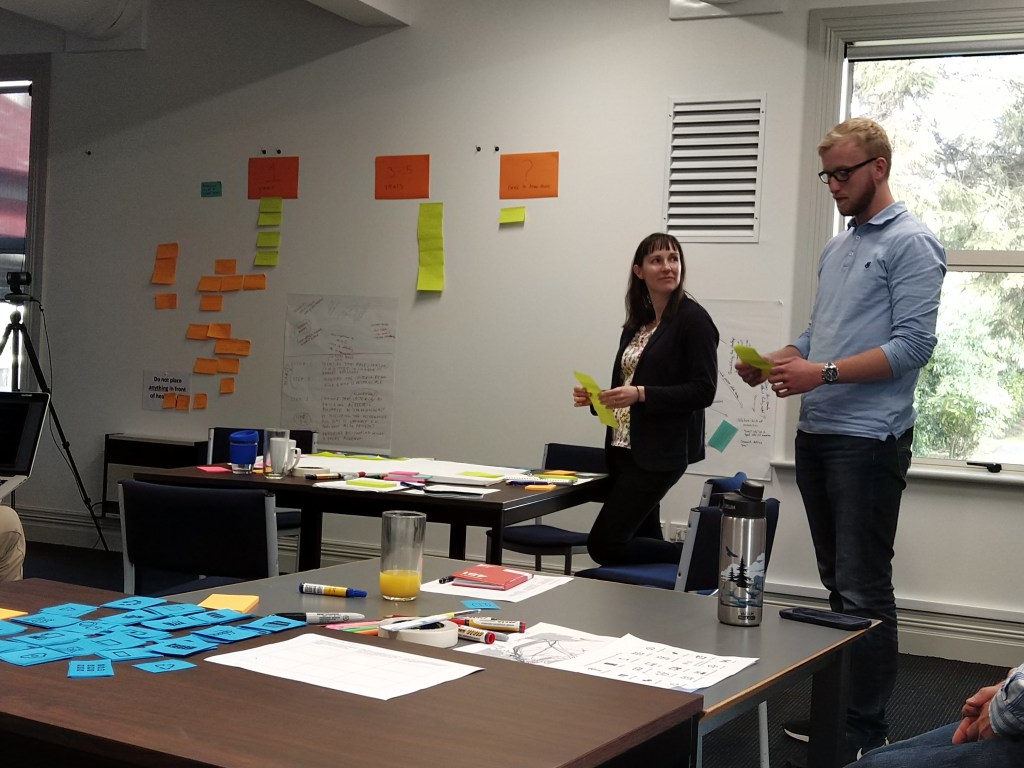
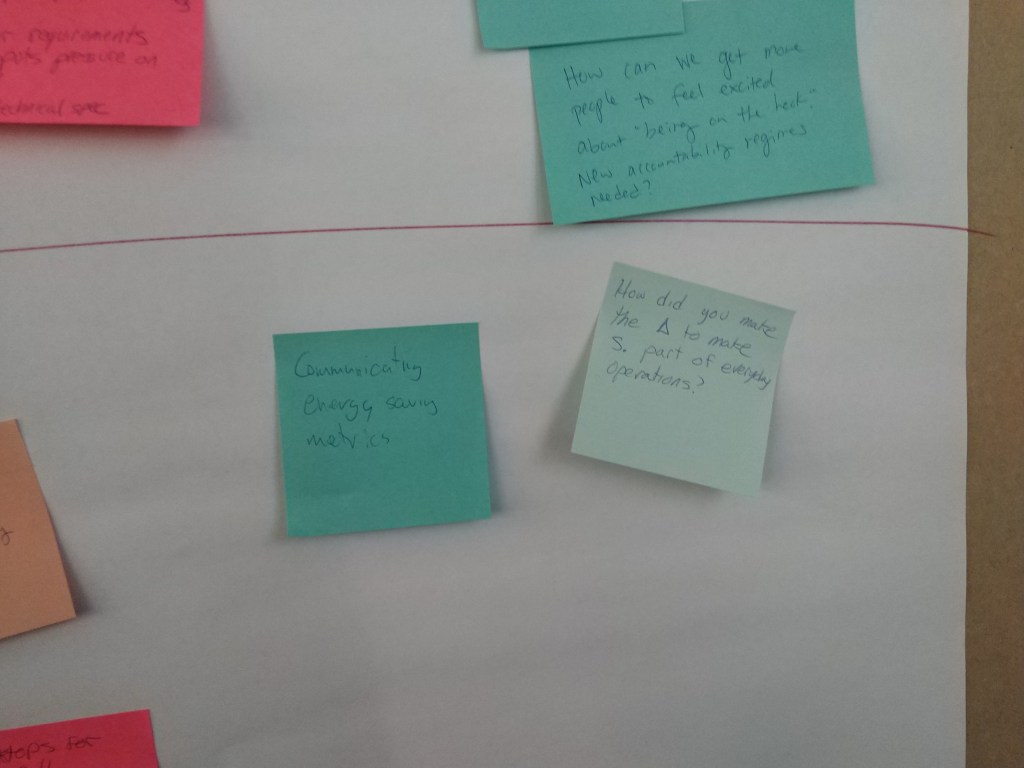
Research for this program has already begun, including the development of interdisciplinary collaborations exploring how to overcome barriers to a more sustainable information communication technology (ICT) industry. In 2020 and 2021, Dr Dawn Nafus—expert in AI and ethics—was a visiting scholar at the University of Otago’s Centre for Sustainability. During this period, we organized the workshop Overcoming Barriers to a Sustainable Digital Technology Industry. We received funding to hire a Summer Intern and to invite Dr Karaitiana Taiuru—a leading Māori scholar in ICTs and data sovereignty, and author of the groundbreaking Treaty of Waitangi/Te Tiriti and Māori Ethics Guidelines for: AI, Algorithms, Data and IOT—to talk about the role of digital colonialism in sustainable technology transitions. The workshop resulted in the publication of an interdisciplinary article (written by anthropologist Dr Nafus, computer scientist Dr Eve M. Schooler and myself).
For this line of research, I am also co-organizing a special issue with members of the Science and Technology Studies Food and Agriculture Network (STSFAN)—a global, online intellectual community for emerging and established scholars working at the nexus of STS and agri-food. The special issue will introduce STSFAN’s collaborative thinking, or co-thinking, approach to scholarship-making as well as the group’s collective experiences as social science researchers collaborating in technology development projects.
I also plan to apply for research funding to study technology co-design processes as an unembedded scholar. This will support me in gaining an external view of co-design processes and the critical collaborative skills necessary to create more sustainable outcomes in technology design and use—and to avoid environmental and social disasters such as those I study in the project Material politics of nuclear.
RELATED PUBLICATIONS
- Nafus, D., Schooler, E. M., & Burch, K. (2021). Carbon-Responsive Computing: Changing the Nexus between Energy and Computing. Energies , 14(21), 1–26. https://doi.org/10.3390/en14216917
Please send me a message if you are struggling to access any of my writing.
 KARLY BURCH, PHD